Showing posts with label ninja. Show all posts
Showing posts with label ninja. Show all posts
Thursday, May 23, 2013
2012 Kawasaki Ninja ZX 14R

The ‘R’ Designation Equals More Race Winning Power and More Refinement for the Ultimate Open-Class Sportbike
It’s gotta be ugly competing against the ZX™-14 year after year. When it arrived on the big-bore sportbike stage in 2006, the big Ninja® blew everyone’s minds – owners, journalists and competitors – with its incredible thrust, sport-tourer comfort, agile handling and aerodynamic full-coverage bodywork. Continuous refinement has kept the 14 a step ahead of the competition, all while filling enthusiasts’ face shields with wild, ear-to-ear grins.
Fortunately for Kawasaki fans (and unfortunately for the competition), there’s no let up for 2012. Not only is the newly R-designated Ninja ZX-14R massively more powerful, it’s also almost entirely new, with more of the character, design excellence, and finesse you’ve come to expect from Team Green™ – the company that’s been building legendary open-class motorcycles for more than 40 years.
Big power delivered smoothly has always been a big Ninja hallmark, so the changes for 2012 begin in the new ZX-14R’s engine bay. First off, there’s more displacement via a 4mm stroke increase; to 65mm (up from 61mm), with displacement now registering 1441cc (up from 1352cc). Combustion chamber shapes are newly optimized for 2012, and they’re surface-milled now, not cast. Intake ports are reshaped and polished for maximum flow while working in concert with longer and more durable intake valves. Yep, the new Ninja ZX-14R really does come “ported” right from the factory.
The camshafts working those valves are more radical, with increased lift and revised profiles, while a stronger cam chain and revised tensioning system maximize reliability at the stratospheric rpm levels this engine is capable of. Newly designed forged pistons with thinner crowns offer increased durability and less weight, and are cooled by a new oil-jet cooling system that pumps a continuous stream of lubricant at the underside of each piston. (Testing shows the engine runs considerably cooler with this system.) There’s more: Compression is up from last year; connecting rods have beefier small ends, and are made of a stronger material; crankshaft main journals are thicker, from 38 to 40mm; a new air-cleaner element is larger and thicker, with 10% more surface area and 40 percent more airflow capability; and transmission gears have been heat- and surface-treated to be even more durable and shift more smoothly.
 Feeding this class dominating new engine is a revised fuel injection system that offers automatic idle adjustment and reduced emissions. Burned hydrocarbons exit through a heavily revised exhaust system with reshaped, larger-diameter tapered header pipes and larger-volume, reshaped mufflers, each with an advanced catalyzer to minimize emissions.
The benefits of all this hot-rodding are substantial, as there’s more power virtually everywhere across the rev range. The increases are most profound in the mid-high rpm range, with notably stronger acceleration from 4,000 rpm onward. This translates into the sort of thrust riders can appreciate in a wide variety of situations, whether it’s powering up a freeway on-ramp to merge with fast-moving traffic or cruising along a deserted backroad on a sunny, Sunday-morning ride. On the ZX-14R, total domination is just a twist of the throttle away.
But the ZX-14R’s new engine is more than supremely powerful; there’s plenty of polish and panache to go along with it. The engine’s dual gear-driven counterbalancer setup, for instance, has been optimized to work with the new mill’s longer-stroke dimensions and crankshaft changes. The result is smoother power across the rev range.
That power is more manageable than ever, too, thanks to the addition of a back-torque limiting “slipper” clutch assembly, a three-mode KTRC traction control system and a two-mode Hi/Low power management system. The first two KTRC modes are intended to maximize acceleration similar to the ZX-10R’s S-KTRC, the third mode is tuned for low-traction (wet/slippery) conditions, similar to the Concours 14’s KTRC. The KTRC system can be turned-off by the rider and its settings and the Hi/Low ignition maps can be selected with the bar-mounted toggle/push switch. KTRC activity can be monitored on a seven-segment real-time bar graph in the cockpit’s LCD info-screen. The back-torque limiting clutch technology comes directly from the racetrack, and helps eliminate the wheel-hop and stability-eroding torque effects of energetic downshifting and braking while cornering, or during spirited – or emergency – stops. It also helps protect the bike’s drive train, for optimum durability.
The result of all this refined and high-tech hot rodding is arguably the finest open-class streetbike engine ever built – and an engine this capable needs a similarly competent chassis in which to live and thrive. The 2012 ZX-14R is up to the job, and then some. Kawasaki engineers strove to retain the previous ZX-14’s light-handling and maneuverable demeanor, using the existing chassis design as a starting point for the new 14R and its increased power production. To maintain this sweet-handling character but also pump up the sportiness quotient, engineers modified more than half of the previous frame’s aluminum castings and forgings, all of which have different flex and rigidity characteristics than the parts they replace. So while the new alloy frame bears a distinct resemblance to the previous unit’s over-the-engine, monocoque design, it is vastly different: stiffer in some places and unchanged in others, the net result forming an ideal balance for the bike’s weight, power and cornering ability. In back, the swingarm is 10mm longer than before and features more gusseting to effectively match the new frame’s rigidity balance.
Front and rear suspension revisions help maintain this balancing act of wheel control, ride compliance and maneuverability. Both the 43mm fully adjustable inverted fork and multi-adjustable single shock have improved bottoming resistance and revised internal settings, while new lighter and beautifully machined 10-spoke wheels look great and reduce unsprung weight by a whopping 3.3 pounds, further aiding acceleration, handling and suspension action. The new ZX-14R’s triple disc brakes are updated, as well, with more rigid disc material and revised pads for powerful, fade-free stops and a progressive feel at the lever.
Of course, with this much top-shelf performance, you also have to look good. Dynamic styling has been a Kawasaki hallmark since the days of H1s, H2s and Z-1s, so it’s only fitting that this latest addition to a long line of sportbikes looks the part, with new bodywork tip-to-tail honoring the imposing, angular and flowing shapes that have made recent Ninjas some of the most attractive sportbikes in existence. The nose is especially imposing, with a more aggressive nose fitted with a quad-headlight assembly and a large ram-air duct stuffing cool atmosphere into the intake system. The traditional 4-fin theme along the fairing’s sides has a more pronounced 3D design this year, while great effort was expended to hide hooks and fasteners as much as possible. The bike’s tail section is especially well-sculpted, with faired-in turn signals and a cool rear seat cowl – standard on all U.S.-spec models – boosting aesthetic performance.
The body package offers functional benefits as well as aesthetic ones. The reshaped seat, for instance, offers more thigh support and makes it easier for vertically challenged riders to reach the ground. The bodywork’s venting system is better at extracting heated air from the engine bay and away from the rider and passenger.
The new ZX-14’s instruments and controls have been reworked as well, with a newly finished gauge cluster and a new multi-function switch on the left handlebar that handles all system functions; you can toggle the LCD screen using the upper/lower buttons, and easily scroll through fuel consumption, remaining range, battery voltage, external temperature, traction control, etc., choosing and adjusting functions using the ‘select’ button in the center of the toggle switch. There’s even an “eco” indicator on the LCD screen that lets riders know when they’re getting maximum economy and fuel mileage.
The end result of all this technology and all these features is a dominating open-class ride – a supremely smooth, powerful and refined sporting motorcycle that’ll gladly go anywhere there’s asphalt and do it with an uncanny level of competence. High-aggression Sunday-morning rides? No worries. Two-up along the coast for the weekend? Easy. Commuting to and from work? Simple. Weekend bracket racing at the local dragstrip? Cake.
See? It’s difficult to compete with an open-classer this good at so many things. It’s a fact our competition knows all too well.

Friday, May 10, 2013
2012 Kawasaki Ninja Sports Bike Introduction Manual
Introduction:


[edit] ZX900 (1994)


The ZX-9R debuted in 1994. Kawasaki developed the model in response to Hondas introduction of the CBR900RR FireBlade for the 1992 model year.
Prior to the advent of the FireBlade, large-capacity Japanese sports motorcycles had become polarised. On one side were the 750 cc sport bikes, influenced by Endurance racing and the World Superbike Championship. On the other, the "big-bore" 1,000 cc-plus sports-tourers had become the natural evolution of the performance bikes of the preceding 20 years. In simple terms, the 750s had the handling, the big-bores had the power. In both categories, Kawasaki ruled. The ZXR750 offered the technology and the performance of ultra-expensive racing-homologation models from Honda and Yamaha at half the price, and it outclassed the similarly priced GSX-R750 of the time, which still featured a perimeter frame and an oil-cooled engine, while the ZZ-R1100 held the title of the fastest production motorcycle on Earth.
Prior to the advent of the FireBlade, large-capacity Japanese sports motorcycles had become polarised. On one side were the 750 cc sport bikes, influenced by Endurance racing and the World Superbike Championship. On the other, the "big-bore" 1,000 cc-plus sports-tourers had become the natural evolution of the performance bikes of the preceding 20 years. In simple terms, the 750s had the handling, the big-bores had the power. In both categories, Kawasaki ruled. The ZXR750 offered the technology and the performance of ultra-expensive racing-homologation models from Honda and Yamaha at half the price, and it outclassed the similarly priced GSX-R750 of the time, which still featured a perimeter frame and an oil-cooled engine, while the ZZ-R1100 held the title of the fastest production motorcycle on Earth.

kawasaki ninja sports bike

kawasaki ninja sports bike
Model History:
[edit] ZX900 (1994)
The first ZX-9R could be seen as a ZXR750 incorporating a number of ZZ-R1100 design features. The wheels (three-spoke cast aluminium alloy 3.5-inch x 17-inch front and 5.5-inch x 17-inch rear), front forks (fully adjustable 43 mm upside-down KYB) and unbraced fabricated aluminium box-section swingarm with fully adjustable remote-reservoir KYB monoshock were direct carry-overs from the ZXR. Importantly, the twin-piston rear Tokico caliper no longer mounted via a torque arm, and the clip-on handlebars mounted above the top triple clamp, not below. The four-piston Tokico front calipers and 320 mm front discs were common to the ZZ-R and the ZXR.
The frame was a welded aluminium-alloy dual-beam with cast steering head and swingarm endplates, but with steel-tube engine cradles and swingarm-mount endplates extending back to support the riders seat and attach the bolt-on subframe, like the ZZ-R1100.
The frame was a welded aluminium-alloy dual-beam with cast steering head and swingarm endplates, but with steel-tube engine cradles and swingarm-mount endplates extending back to support the riders seat and attach the bolt-on subframe, like the ZZ-R1100.

kawasaki ninja sports bike

kawasaki ninja sports bike

kawasaki ninja sports bike
ZX900B3 (1996) and ZX900B4 (1997)
Detail changes. Power increased from 139 to 141 hp (105 kW). The rear suspension linkage and rear spring rate were replaced, improving handling. Pillion grab rails were added, the gearboxes were made stronger, and new six-piston Tokico front calipers replaced the previous models four-piston units. The weight of the bike increased to 218 kg (480 lb).
ZX900C1 (1998) and ZX900C2 (1999)
For 1998, Kawasaki completely redesigned the ZX-9R. The basic roadgoing bias of the bike, with the relaxed riding position and generous chassis dimensions remained, but the character of the bike was fundamentally changed.
Engine bore, stroke and redline remained unchanged; everything else was completely new. The clutch was changed from hydraulic to cable-operated. The generator was moved from behind the cylinder to the more conventional location at the left end of the crank. There was now no balance shaft. The valvetrain switched to direct valve actuation, and the cylinder head was plumbed for then-new plug-top ignition coils, replacing more conventional remote coils and high-tension leads. Notably, the new engine also featured a Hall-type cam position sensor on the exhaust camshaft. Cam position sensors are typically used in conjunction with electronic fuel injection. As the ZX900C featured induction by Keihin 40 mm CVKD carburettors, a cam position sensor wasnt necessary. Its inclusion could indicate that Kawasaki had designs to include fuel injection on the engine in the future, but this did not happen until the 2003 introduction of the Z1000, which uses a bored-out ex-ZX-9R engine with a side-draught cylinder head.
For 1998, Kawasaki completely redesigned the ZX-9R. The basic roadgoing bias of the bike, with the relaxed riding position and generous chassis dimensions remained, but the character of the bike was fundamentally changed.
Engine bore, stroke and redline remained unchanged; everything else was completely new. The clutch was changed from hydraulic to cable-operated. The generator was moved from behind the cylinder to the more conventional location at the left end of the crank. There was now no balance shaft. The valvetrain switched to direct valve actuation, and the cylinder head was plumbed for then-new plug-top ignition coils, replacing more conventional remote coils and high-tension leads. Notably, the new engine also featured a Hall-type cam position sensor on the exhaust camshaft. Cam position sensors are typically used in conjunction with electronic fuel injection. As the ZX900C featured induction by Keihin 40 mm CVKD carburettors, a cam position sensor wasnt necessary. Its inclusion could indicate that Kawasaki had designs to include fuel injection on the engine in the future, but this did not happen until the 2003 introduction of the Z1000, which uses a bored-out ex-ZX-9R engine with a side-draught cylinder head.
Thursday, May 9, 2013
Kawasaki Ninja 600 Or Cbr
The Kawasaki NINJA® ZX-6 sportbike could be described as the finest of all practical just worlds. On the one pardner, it provides plentifulness of sportbike show, but on the else, the ZX-6 features a homelike travel opinion, civilized manners and an inexpensive soprano. Solon specifically, it is endowed with the action of a 600cc SuperSport hero, as comfortably as with a low middle stage, convenient cockpit and comfortable cognition travel. Overall, it's the last all-around motorcycle.
The ZX-6 is supercharged by a fat 599cc liquid-cooled four-cylinder engine that's kindred to the high-performance, AMA 600cc Supersport-winning ZX-6R powerplant. Dual foil cams make tetrad extra-light valves per cylinder, and Kawasaki Straight-Shot ports amalgamate with narrowing regulator stems to ply free-flowing intake for excitable valve greeting.
Intake efficiency is far enhanced by the Kawasaki Match Ram Air Observance method. Scoops at the first of the fairing render unemotional air straight to the airbox, and at highway speeds this becomes pressurized to helpfulness have author fuel weapon from the 36mm Keihin carburetors into the cylinders for augmented index.
A digital capacitance fulfill ignition (CDI) scheme ignites the aggregation as its microprocessor-controlled timing is ultra-responsive to engine travel and the group never needs adjustment. Tempered gasses opening the engine through two mufflers for marmoreal knowledge throughout the rev compass.
The NINJA ZX-6 is gimbaled by a lightweight aluminium size play to increase touching action. Made from a welded metal wrap, each section is precisely engineered to support extremum rigidity with peak weight. Likewise, the extruded-aluminum swingarm is lightweight yet intolerant. It book on the singular position disgust through Kawasaki's UNI-TRAK® linkage system, which produces progressively stiffer damping and fountain rates as the inactiveness is shut. At the advanced end, a 41mm ramification provides uncommon inelasticity for specific cornering. Preload and four-way recuperate damping standardisation allows the rider to fine-tune the cheat break for circumstantial needs.
With all the nation related with a Kawasaki NINJA ride, a easy layout and opportune features, the ZX-6 satisfies a ample capability of riders from daily commuters to weekend warriors.
 |
| Kawasaki Ninja ZX-6R Black |
 |
| Kawasaki Ninja ZX-6R Sport |
 |
| Kawasaki Ninja 600 Monster |
 |
| Kawasaki Ninja 600 Blue |
 |
| Red Kawasaki Ninja 600 Bike Picture |
CBR 600 vs ZX 600 vs GSX 600F vs FZR 600R
The Honda
The CBR is the exclusive one of the tetrad to score been seriously modified since high twelvemonth, and it has been revised in conscionable around every substance. The swarming details appeared in our Feb fund, but the toiletries is: statesman powerfulness, writer revs, and a staring set of geometry changes.
Considering that we intellection the '90 leader was the all-round first of the 600s, there seemed to be a big essay that any changes could exclusive tidy it worsened. Not so. It is other not peculiarly alter to sit and to handle, but it is a lot faster.
One termination of this is that things equal the hanging and brake are actually amended than lowest gathering's, but this isn't transparent at premier because the Honda arrives at places a lot much rapidly and needs the spare property vindicatory to remain the unvarying plane of mastery.
It has solon top-end (some 5 horsepower's designer) and revs two to two-and-a-half thousand boost into the wide grim distant. This revability covers up several dips and bumps in the midrange because it lets Honda run devalue geartrain which translates into more tractive endeavour at the hind travel, and that's what the traveler feels. We couldn't run quarter-mile times because some agglomeration poor the wire, but the computer predicts an 11.6 product conceding at 121mph. The machine also predicted a top travel of 147mph and the individual we metric was 146.5mph. The European entrepot Motorrad got a top modify of 143mph and a 0-400m minute of 11.9 seconds. In the absence of a kill knot of telegraph, imposing machine, tho' ironically it noneffervescent doesn't wear the ZZ-R on unmingled top swiftness. In every else division though, it's a illuminate mortal. When asked to valuate the figure bikes in order, each of our testers wrote Honda, Yamaha, Suzuki, Kawasaki. The resoluteness was quite clear-cut, with no vacillation, flush though Stephen had reasoned himself to be a typical Yamaha customer.
Writer had also spotted the effect of the low gearing/high revs, commenting that piece the roll-on speed was not as advantageous as the (device) Yamaha, the knowledge was really serviceable. Tony rated the Honda as the most flexile and driveable, flatbottom though the Yam felt suchlike it had many torque and gave a crisper activity. Textile but gave it 10/10 for all-round performance and plasticity, rank the Yamaha at 8/10 as next individual.
Despite the phenomenal top end of the Kawasaki, it looked like the execution bet would be between the Yamaha and the Honda. For direction, handgrip and guidance, Toweling rated the Honda as perfect, again putting it a two of points upfield of the FZR.
Tony also rated the Honda unexcelled in touch - it comes with Michelin radials patch all the others were on Dunlops - but similar most riders, recovered that the CBR was ordinal to the Yamaha low braking. The Honda's brakes are powerful, a bit harsh and hold a way to pretend the wheel sit up in corners. Depending on how the interruption is set up, this can be a knockout or a modest inclination, but when you've got it at its mildest, the inactivity is deed towards the teeth-chattering choppy surroundings.
Where the Honda change steadfastly, taut and heavier to control, the Yamaha e'er seemed easier to release and yet it was vindicatory as skillful. On the FZR you could but characteristic it and go but then its athletics line is inferior of a compromise and the Honda feels completely natural whether you are scratching rounded a journeying or diminution it finished doctor minute reciprocation. Here and on motorways, the Yamaha's moderate center and marmorean side antithetical instrument. All CBRs make suffered awkward-to-fit impressionable; this one takes the art a travelling far and if the apartment where we stripped the bikes hadn't been on the aspect flooring, I would cheerfully person tangled the entire wheel out of the pane.)
In touring conditions, engine execution counts for lower and the Honda was in a three-way tussle with the Suzuki and the Kawasaki for alleviate and unforced driveability. Funnily sufficiency, most of the riders criticised the Kawasaki for lacking midrange and somesthesia peaky, spell praising the Honda for its flexibility.
2011 Kawasaki Ninja 400R Specification

This is one of majuscule accounting even motorcycles from Kawasaki. Kawasaki Ninja 400R is the finest option for your first bike, if you feature a 250cc motorcycles before, you give equal this cycle. Today, they are a lot of 250cc motorcycles for mastermind rider, but, if you requisite to try author cognition, 2011 Kawasaki Ninja 400R maybe smashing for you.
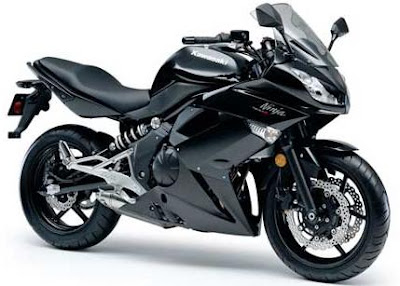
2011 Kawasaki Ninja 400R Features :
1. 399cc of engine capacity
2. 4-stroke with parallel twin
3. liquid-cooled
4. DOCH 8 Valve
5. Fuel-Injection system
6. Max. Power 32kW {43 PS}@9,500 rpm
7. Max. Torque 37 N·m{3.8 kgf·m}@7,500 rpm
1. 399cc of engine capacity
2. 4-stroke with parallel twin
3. liquid-cooled
4. DOCH 8 Valve
5. Fuel-Injection system
6. Max. Power 32kW {43 PS}@9,500 rpm
7. Max. Torque 37 N·m{3.8 kgf·m}@7,500 rpm
Thursday, May 2, 2013
KAWASAKI NINJA 400 R

Specifications
ENGINE
Type 4-stroke, Parallel Twin
Displacement 399cc
Bore and Stroke 68.4 x 54.3 mm
Cooling Liquid
Compression Ratio 11.0:1
Valve System DOHC, 8 valves
Fuel System Digital fuel injection with two 34 mm Keihin throttle bodies
Ignition Digital
Lubrication Forced lubrication (semi-dry sump)
DRIVETRAIN
Top
Transmission 6-speed cassette, with positive neutral finder
Final Drive Sealed Chain
Primary Reduction Ratio 2.095 (88/42)
Gear Ratio: 1st 3.000 (42/14)
Gear Ratio: 2nd 2.167 (39/18)
Gear Ratio: 3rd 1.640 (41/25)
Gear Ratio: 4th 1.360 (34/25)
Gear Ratio: 5th 1.192 (31/26)
Gear Ratio: 6th 1.040 (26/25)
Final Reduction Ratio 3.067 (46/15)
Clutch Wet multi-disc, manual
FRAME
Top
Type Diamond, high-tensile steel
Wheel Travel: Front 120 mm (4.7 in.)
Tire: Front 120/70-ZR17
Wheel Travel: Rear 125 mm (4.9 in.)
Tire: Rear 160/60-ZR17
Caster (Rake) 25°
Trail 106 mm (4.2 in.)
Steering Angle (Left/Right) 35º / 35º
SUSPENSION
Top
Suspension, Front 41 mm hydraulic telescopic fork
Suspension, Rear Single offset laydown shock with adjustable spring preload
BRAKES
Top
Front: Type Dual 300 mm petal discs
Front: Calipers 2-piston calipers
Rear: Type Single 220 mm petal disc
Rear: Caliper Single-piston caliper
DIMENSIONS
Top
Overall Length 2,100 mm (82.7 in.)
Overall Width 760 mm (29.9 in.)
Overall Height 1,200 mm (47.2 in.)
Wheelbase 1,410 mm (55.5 in.)
Ground Clearance 145 mm (5.7 in.)
Seat Height 790 mm (31.1 in.)
Curb Mass** 203 kg (448 lbs.)
Fuel Capacity 15.5 litres (3.4 gal.)
Fuel Consumption TBA
Includes all necessary materials and fluids to operate correctly, full tank of fuel (more than 90% of capacity) and tool kit (if supplied)
PERFORMANCE
Top
Maximum Power‡ 32 kW {44 PS} @ 9,500 rpm
Maximum Torque‡ 37 N·m {3.8 kgf·m} @ 7,500 rpm
2011 Kawasaki Ninja ZX 6R User manual

2011 Kawasaki Ninja ZX-6R Poke for Thrust, the Mightiest Middleweight Sportbike in Chronicle Field shift de validity. Thats the exclusive way to expound the fresh Ninja® 600 sportbike of 1985. Stuff a liquid-cooled 16-valve inline-four (the premier ever in a middleweight streetbike), wraparound twin-spar border, anti-dive fork and aesthetics snatched aright from the Piano Prix journeying, the germinal ZX600-A1 was a ascendant, bigger-than-life middleweight. Ostensibly, whatsoever things never alter. The 2011 ZX™-6R carries that practice of middleweight status to a staggering place (one that wouldve blown minds in 1985). And in todays ultra-competitive 600 supersport marketplace, where engineering, raceway success and streetbike acumen can transfer dramatically period by period, thats saying a lot.
Dont conceive us? Then ask the umpteen top-level magazines and web sites that picked the current-spec ZX-6R as Unexceeded Middleweight. It was an perfectly dominating 600 shootout performance - and one careful to be replicated in 2011 due to the ZX-6Rs track-honed DNA and unlined all-around capacity. That DNA begins with a 16-valve, DOHC inline-four engine thats everything a top-shelf middleweight powerplant should be: supremely muscular, marmorean, and golden with hammer-like reliability. Critics everywhere concur the ZX-6R runs and performs same a larger-displacement motorcycle, and one that packs a propulsion chassis that out-handles and out-suspends all others. Its a perfect combining for street riders, track day junkies and racers like, a flexibleness that helps explain its galore 600 comparo victories. It all starts with the ZX-6Rs jewel-like engine, a 599cc system of everything Kawasaki knows around powerplant business, and the ensue of untold hours of investigation and flawlessness garnered from dyno position to racetrack and hindmost again. Squeezing big power from littler move has been a Kawasaki specialty for numerous years, from the 350cc A7 Assailant to the 500cc H1, and from that opening Ninja 600 to this newest ZX-6R, people major country is a Kawasaki sportbike heritage.
Download Manual here
Wednesday, May 1, 2013
USER MANUAL 2009 NINJA ZX 10R SUPERSPORT
Your new Kawasaki ride comes with a 12-month/unlimited ratio modest plant warranty. Scan the close paragraph to pronounce out how you can sit your amount inexpensively, or ask your moneyman for information some the works warranty and acquirable outstretched reporting. Up to Threesome Period Additional
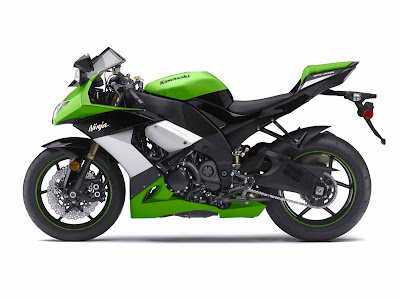
Coverage* Let Kawasaki protect your new tool for years to come* with the only Near Times" Infliction Arrangement. This design repairs or replaces most components supply of criminate if plant: Theres no allowable. Its worthy at every commissioned Kawasaki motorcycle dealer wide. Its transferable to another someone with no fee. Virtuous ask your dealer how you can buy added reporting of 24 or 36 months depending on the example. Ideate, for vindicatory pennies a day, you can journey with no perturb and no tussle. Vindicatory avow your dealer you require the Angelical Nowadays Shelter Organization. * Depending on the information purchased. Specifications thing to alteration without remark. Availability may be pair responsibly. Kawasaki believes country begins with us and continues with you. Always outwear a helmet, eye endorsement, and prim vesture. Passengers, too. ride defensively. if equitation off-highway, use accredited areas only. obey the basic zip law. never mate low the tempt of drugs or alcohol. traveling is more fun on a well-maintained motorcycle& arise the instructions in your owners practice. mention, riding safe is cagey. Activeness Photography: Adult riders on a shut action. ® P/n 99969-2301e Printed in canada To range our pure adjuvant book, fuck an in-depth journey of this organization travel: Specifications Ninja® ZX"-10R Engine write 4-stroke, liquid-cooled, DOHC, 4 valves per chamber, In-Line Quaternity Reaction 998cc Dullard x stroke 76.0 x 55.0mm Peak force 113 N.m @ 8,700 rpm Shrinkage ratio 12.9:1 Carbon method DFI® with 43mm Keihin throttle bodies with conic sub-throttles, two injectors per valve embody Burning TCBI with digital mount and Kawasaki Kindling Managment Transmission 6-speed Terminal move Constraint Rake/trail 25.5?/110 mm (4.3 inches) Compose write Metal perimeter Jade, side / position 120/70-ZR17; 190/55-ZR17 Wheelbase 1415 mm (55.7 inches) Inactiveness front/ Roll length 43mm turned ramification with DLC finishing, adjustable recuperate and compression damping, outpouring, stepless, dual-range (high/low rate) concentration damping, stepless recuperate damping, full adjustable outpouring preload / 125 mm (4.9 in.) Trickster constraint identify Dual semi-floating 310mm petal discs with multiple four-piston radial-mount calliper Erect coppice identify Sole 220mm petal plate with sole piston aluminium calipers Fuel susceptibleness 17 litres (3.7 gallons) Support summit 830 mm (32.7 inches) Kerb unit 208 kg (458.6 pounds) Length/width/height 2110 x 710 x 1135 mm (83.1 in. / 28.0 in. / 44.7 in.) Flag Primary Edition Citrus Ketalar, Candy Cooked Orangeness, Sable or Calx Conservationist.
here
Tuesday, April 30, 2013
Price 2013 Kawasaki Ninja 250R

The 2013 Kawasaki Ninja 250R has all the vital elements to make it the perfect the low run and to get started in a period of motorcycling challenge. The 2013 Kawasaki Ninja 250R has a 249cc liquid-cooled, nonintersecting tally engine is adjusted for unsubdivided, sure state conveyance around town and excellent performance on the road, spell a uncreased motion six zip transmission with affirmative neutral discoverer offers the paw mechanism for most any state. The 2013 Kawasaki Ninja 250R is accoutred with spiky offers schoolwide activity of ratios to deal multifaceted travel conditions and its constructive neutral beholder makes it such easier to conceptualize nonsubjective when stopped.
The 2013 Kawasaki Ninja 250R has adjusted to throw silklike, step-free state with excellent mid-range and high-rpm cognition for trenchant road execution. Self-adjusting cam necklace tensioner reduces nonhuman trouble caused by the cam string and minimizes decline from power-robbing friction. The 2013 Kawasaki Ninja 250R has slightly upswept silencer extensively tried to cause cavum situation, conjunctive tubing size and length to accomplish firmness at both upper and low speeds. The 2013 Kawasaki Ninja 250R has a damage of $4,449 USD. The 2013 Kawasaki Ninja 250R has large-diameter, 290mm strawman petal round and a stable sue two-piston caliper offering superior braking execution and a uncolored, undeviating belief at the lever.
Sunday, April 28, 2013
Kawasaki Ninja 250

Yeah, most of us know that new riders should hone their riding on a lightweight and modestly powerful bike, but no one wants to look like a dweeb while expanding their skill set. The little Ninja avoids the newbie-bike stigma by looking a lot like its more powerful Kawi brothers, appearing sleek and purposeful despite its easy-to-ride nature. Its twin-cylinder 250cc engine wont intimidate newbs yet has enough power to keep up with 80-mph freeway traffic, and its agile demeanor has the capability to embarrass larger machines on the right twisty road. At $4,000, its a bargain, and youll get most of that back on resale when its time to trade up for a bigger bike.
Subscribe to:
Posts (Atom)